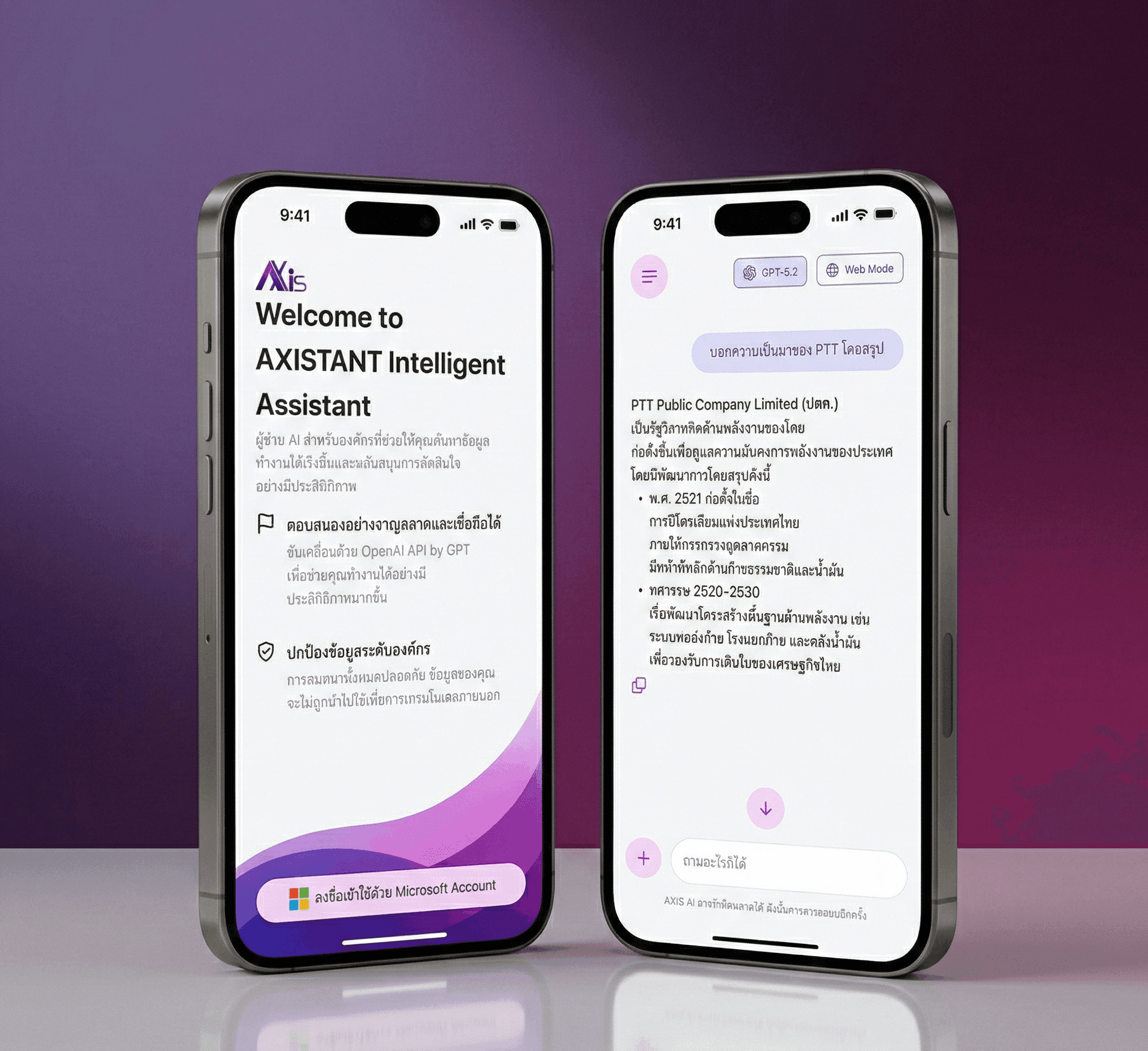
The Challenge
The Challenge
PTT Group needed to accelerate AI transformation by making AI accessible to all employees, not just technical teams. The organization faced three critical challenges:
AI Adoption Barrier
- Employees had no practical exposure to AI tools
- Existing solutions required technical knowledge
- No unified entry point for organizational AI capabilities
Enterprise Requirements
- Secure authentication and data governance
- Integration readiness with internal systems
- Scalable architecture for future expansion
Speed-to-Value
- Pressure to deliver tangible results quickly
- Need for real user feedback to inform strategy
- Balance rapid deployment with long-term flexibility
Core Problem
How might we enable employees to leverage AI in their daily work through a simple, secure, and scalable mobile experience?
Process
Strategy: "Fast First, Then Scale"
Phase 1 — MVP1 (15 days)
- Core chat experience with OpenAI integration
- Enterprise authentication via Azure AD
- Focus on rapid deployment and user feedback
Phase 2 — Enterprise Platform
- Multi-bot architecture ("Army of Bots")
- Organizational data integration
- Advanced RAG and guardrails
User Experience Design
Key Principles
- Familiarity: Chat interface like popular messaging apps
- Simplicity: No technical knowledge required
- Responsiveness: Real-time streaming feedback
- Context: Persistent conversation history
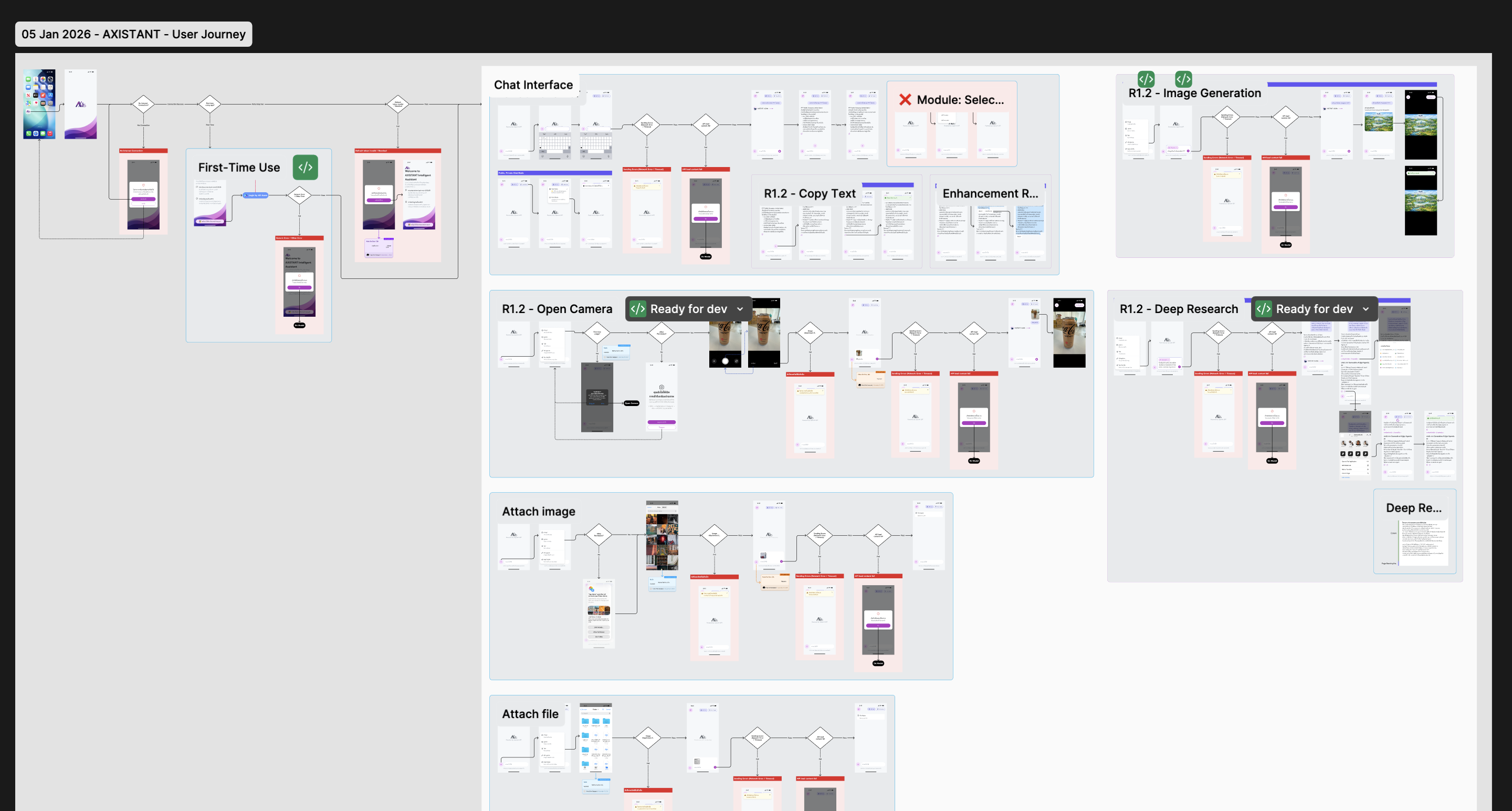
Information Architecture
AXISTANT App
├── Authentication (Azure AD)
├── Chat Interface
│   ├── Text + File Input (1 file/message)
│   ├── Streaming Response
│   └── Conversation History
└── Future: Multi-Bot Selection
Core Features (MVP1)
| Feature | Description |
|---|---|
| Enterprise Auth | Azure AD integration for secure access |
| 1:1 Chat | Personal AI conversation space |
| File Upload | Context-rich queries with documents/images |
| Streaming | Real-time response for better UX |
| History | Persistent conversations across sessions |
Design System
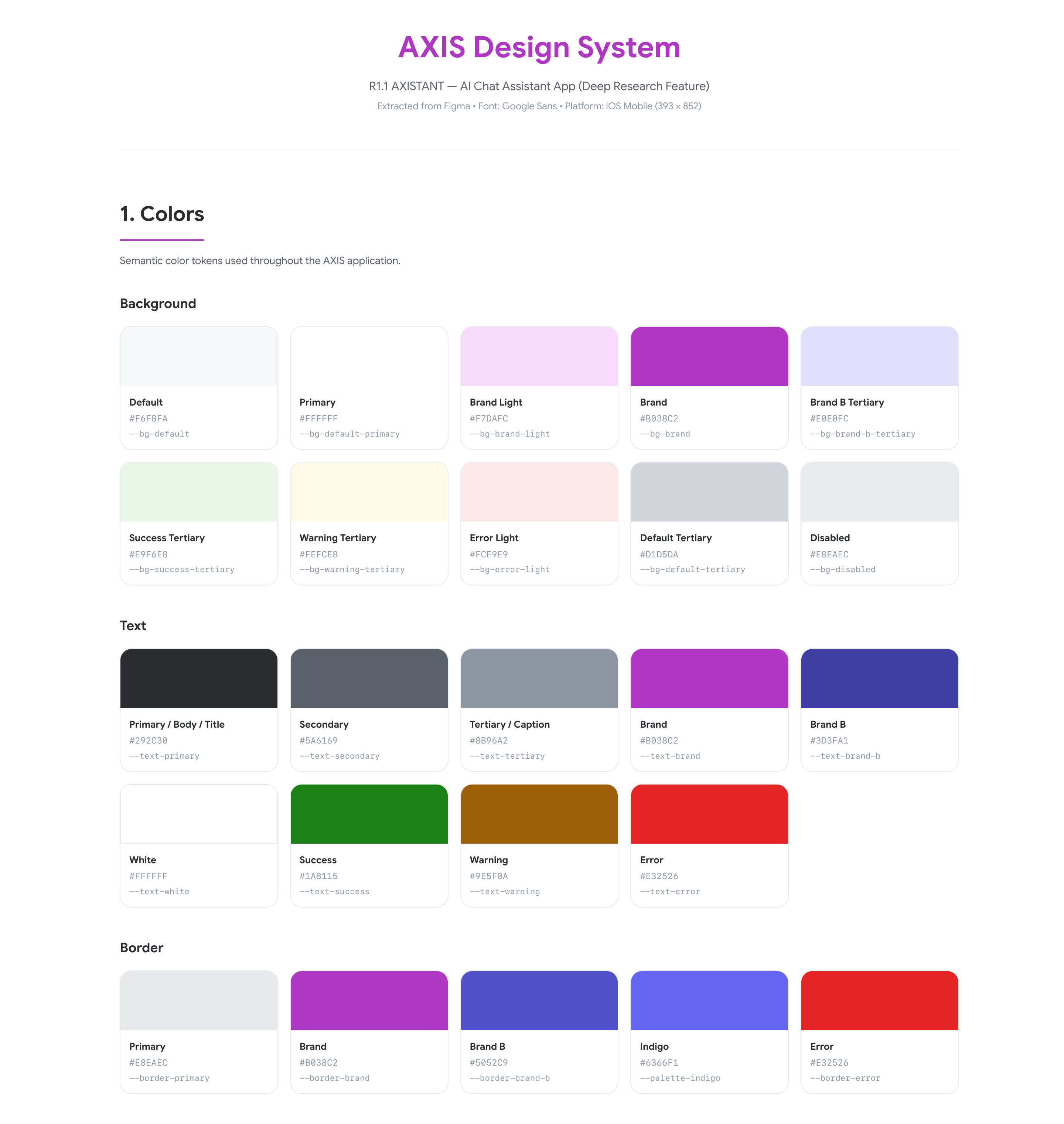
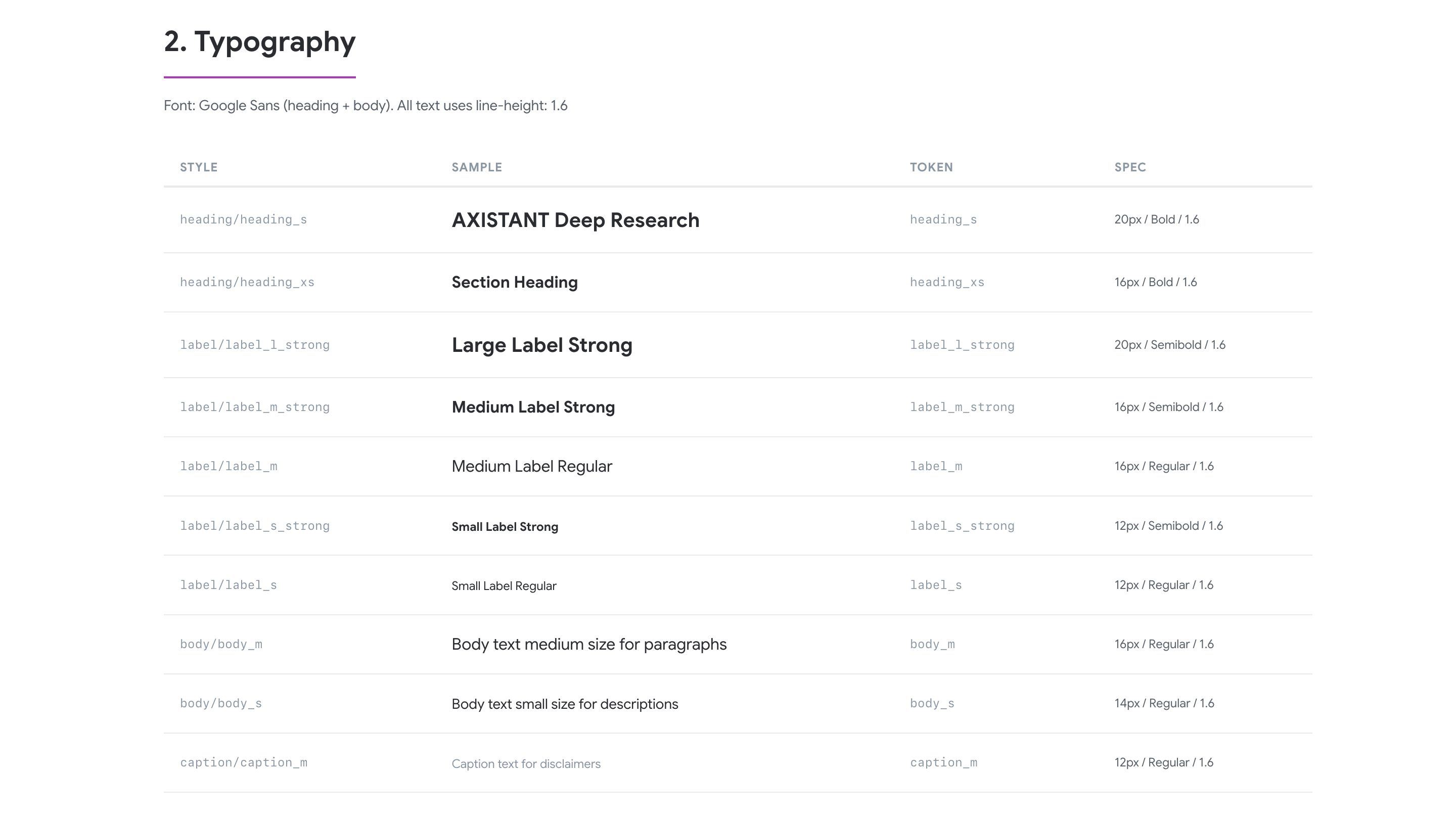
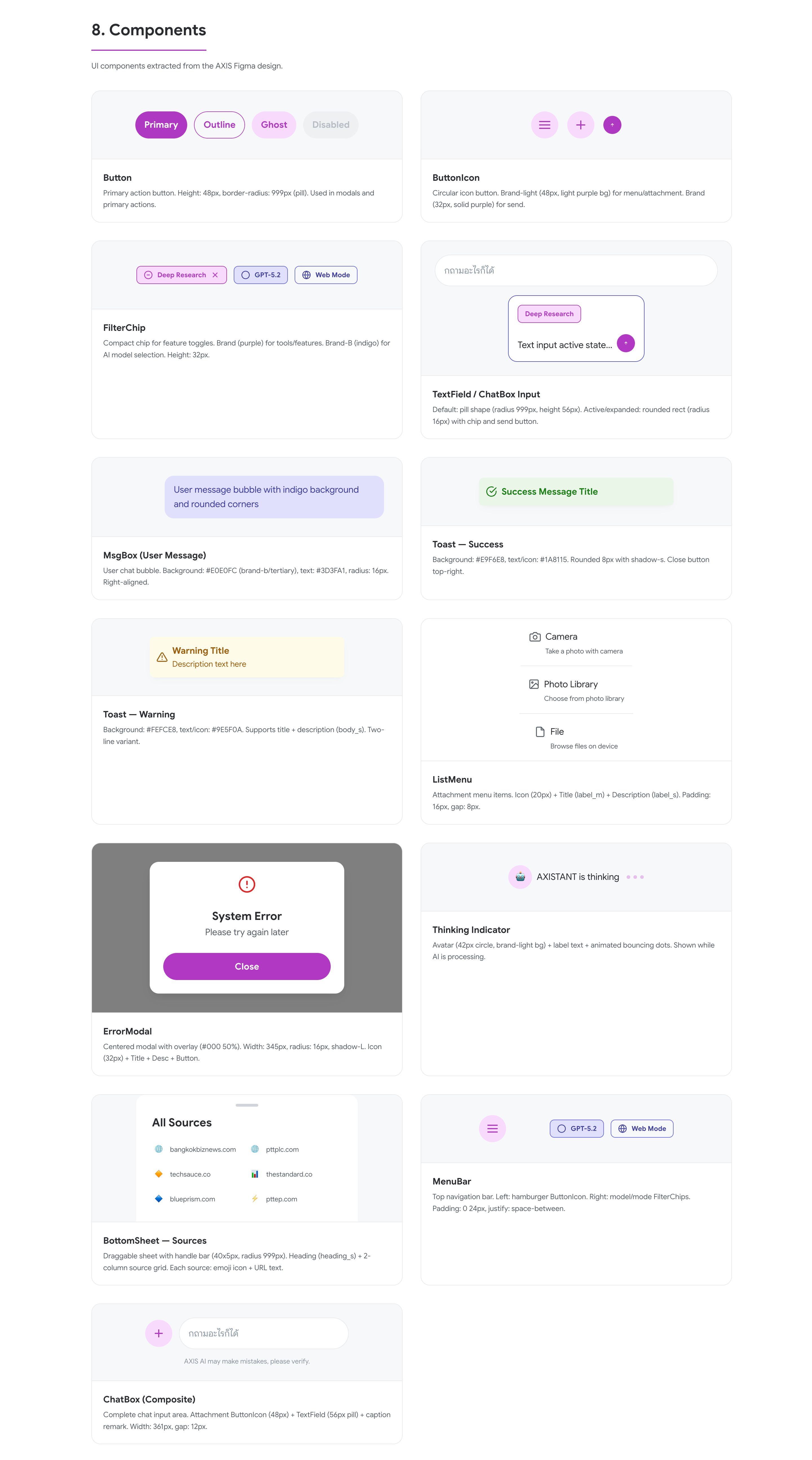
Components
- Chat bubbles with role differentiation
- Input field with attachment support
- Loading and streaming states
- Error handling patterns
Testing & Iteration
Conducted internal beta testing with employee groups, tracking:
- Usage patterns and conversation topics
- Performance perception (streaming impact)
- Feature requests and pain points
Key Insights
- Streaming response significantly improved perceived speed
- Demand for specialized bots for different tasks
- Need for broader file format support
- Request for integration with organizational knowledge bases
Outcomes
Results
Delivery
- MVP1 deployed in 15 days (vs. typical 2-3 months)
- Enterprise-grade authentication from day one
- Multi-platform support (iOS & Android)
- Scalable architecture ready for Phase 2
Impact
- Democratized AI access across organization
- Real usage data to inform AI strategy
- Foundation for future multi-bot platform
- Reduced AI anxiety through hands-on experience
Key Learnings
What Worked
- MVP-first approach enabled rapid learning
- Direct OpenAI integration reduced complexity
- Streaming UX improved perceived performance
- Enterprise auth built trust immediately
Design Decisions
- Mobile-first: Employees are mobile-centric with lower adoption barrier
- Chat interface: Familiar pattern with low learning curve
- Direct OpenAI: Speed to market while deferring infrastructure complexity
Role & Contributions
Product Designer (UX/UI)
- User research and workflow analysis
- Information architecture and user flows
- UI design and component library
- Usability testing and iteration
- Cross-functional collaboration with engineering and product teams
Skills Applied
- Strategic thinking: Balancing MVP speed with scalability
- User-centric design: Prioritizing experience over technical sophistication
- Rapid prototyping: 15-day delivery cycle
- Enterprise UX: Navigating security and organizational constraints