The Challenge
About this Project
Mind Mood is a mental wellness mobile application that helps users build emotional self-awareness through daily mood tracking, curated mental health content, and guided mindfulness practices. The product is designed around low-friction daily habits — making it easy for users to check in with their emotional state, reflect over time, and access support resources when needed.
Role: UX/UI Designer Platform: iOS & Android Industry: Health & Wellness / Mental Health
The Problem Most mental health apps suffer from one of two failure modes: they're either too clinical and intimidating for casual users, or too shallow to drive meaningful behavior change. Users struggle to maintain consistent engagement, and the emotional barrier to opening a "mental health app" during difficult moments is often underestimated.
The Solution
Mind Mood was designed with minimal commitment as a core principle — a mood log that takes under 10 seconds, content surfaced based on current emotional state, and meditations that fit into micro-moments throughout the day. The visual language was intentionally calm, soft, and non-clinical to lower the psychological threshold of daily engagement.
Design Process / Approach
User Research & Persona Mapping Identified primary user segments: first-time mindfulness practitioners, users managing mild anxiety or stress, and habit-builders seeking daily emotional check-in routines. Mapped key motivations, barriers, and moments of use across each segment.
UX Flow Design Designed onboarding around progressive emotional context-setting — introducing mood logging before surfacing content recommendations. Built a habit loop structure: log → reflect → engage → return.
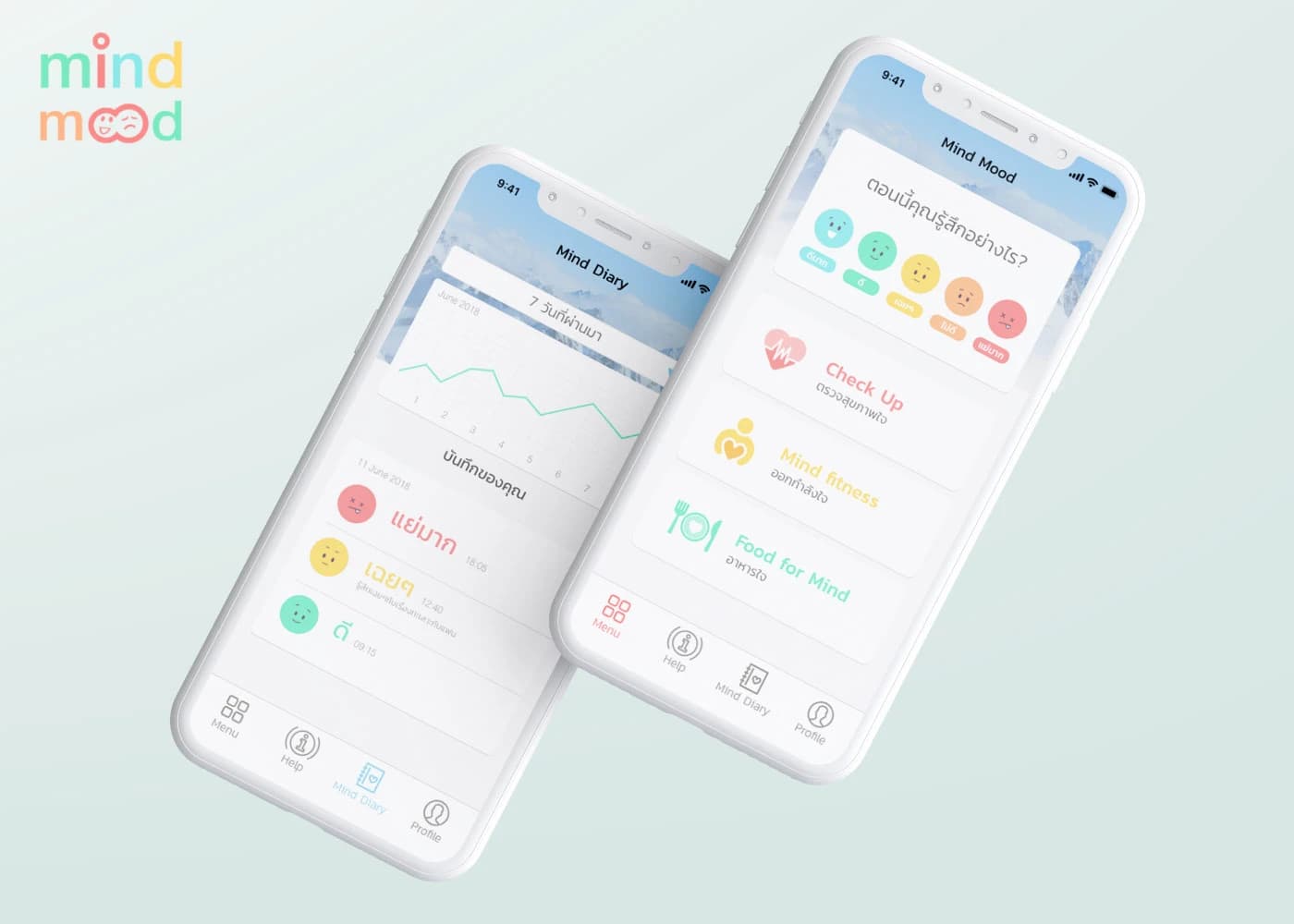
UI Design Created a soft, accessible visual system in Figma using warm neutrals, rounded components, and calming illustration-adjacent iconography. Covered key screens including daily check-in, mood history, article feed, guided meditation player, and emotional insight summaries.
Micro-interaction Design Paid particular attention to transition states and feedback moments — ensuring the app felt gentle and responsive at emotionally sensitive touchpoints like mood selection and reflection prompts.
Key Features
- Daily mood logging with emotion tagging and optional short journaling
- Mood history visualization showing emotional patterns over time
- Curated mental health article feed contextually matched to logged mood states
- Guided meditation library with session length filters for flexible daily use
- Weekly emotional insight summary encouraging self-reflection
Outcomes
- Designed a low-friction daily check-in flow reducing time-to-log to under 10 seconds
- Established a calm, accessible visual language that lowers engagement barriers for first-time mental health app users
- Delivered a content surfacing pattern that adapts to user emotional state for more relevant in-app experience