The Challenge
Syndicate — Agentic Workflow Platform
Case Study: Automating software development lifecycle through a multi-agent AI ecosystem.
1. How it Works (System Mechanisms)
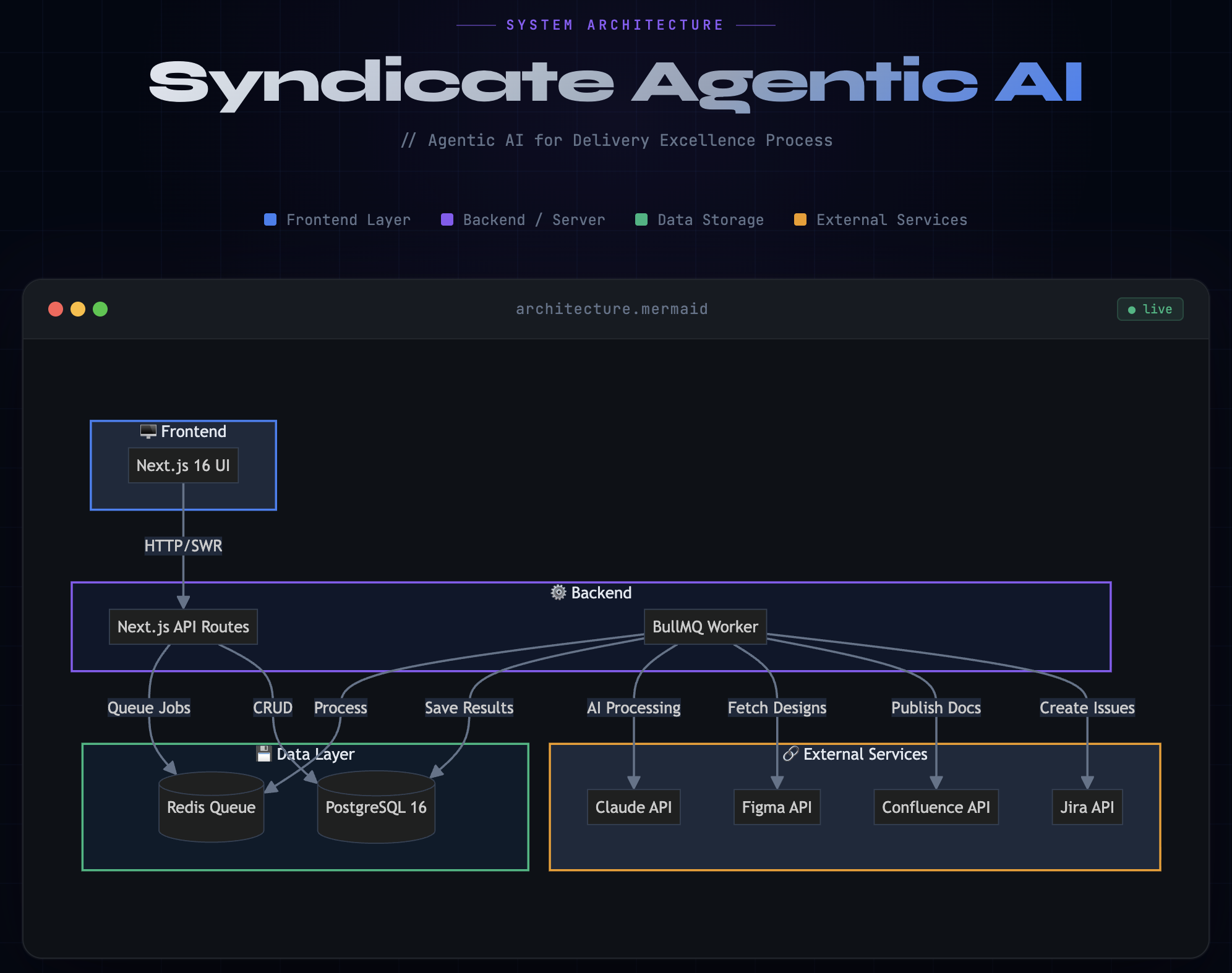
Syndicate is a multi-agent AI platform designed to transform the traditional software development lifecycle (SDLC) into an autonomous workflow. It orchestrates a "swarm" of specialized AI agents working in harmony from requirements to delivery:
Requirement & Design Extraction: The process begins by ingesting data from Figma (via URL) or business requirements (through the BRD Analyzer) to extract the foundational context needed for development.
- 8-Phase Agentic Pipeline: Data flows through an automated pipeline consisting of eight core phases:
- Analysis (BA/SA): Automatically generates Business and Technical Specifications, including dynamic PlantUML diagrams.
- Quality Audit: Features autonomous quality loops where "Auditor Agents" review the work of "Drafter Agents" to ensure 100% precision and consistency.
- QA & Automation: Generates manual test cases and automated test scripts (Maestro YAML) based on the analyzed designs.
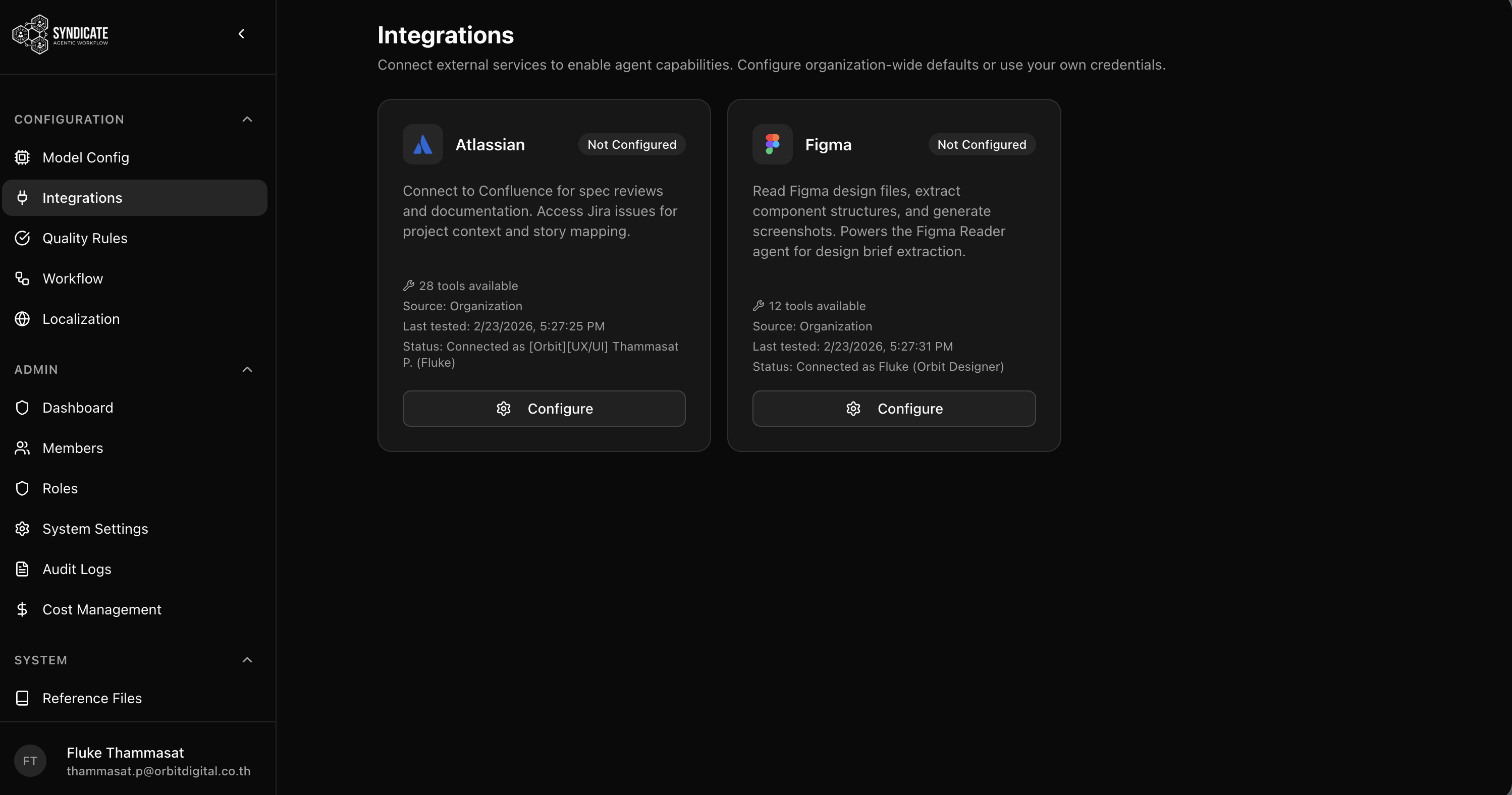
Third-party Orchestration: Syndicate integrates directly with enterprise tools like Jira, Confluence, and Figma via the Model Context Protocol (MCP), publishing results to live environments instantly.
Efficiency Gains: By automating repetitive documentation and preparatory tasks, Syndicate reduces the average feature turnaround time from 6-10 days to just 0.5-1 day—an 80-90% time saving.
2. Design Concept
The core design philosophy of Syndicate is "Transparency & Control in Autonomous Systems," ensuring that while AI handles the heavy lifting, human oversight remains absolute:
The Dashboard of Intelligence
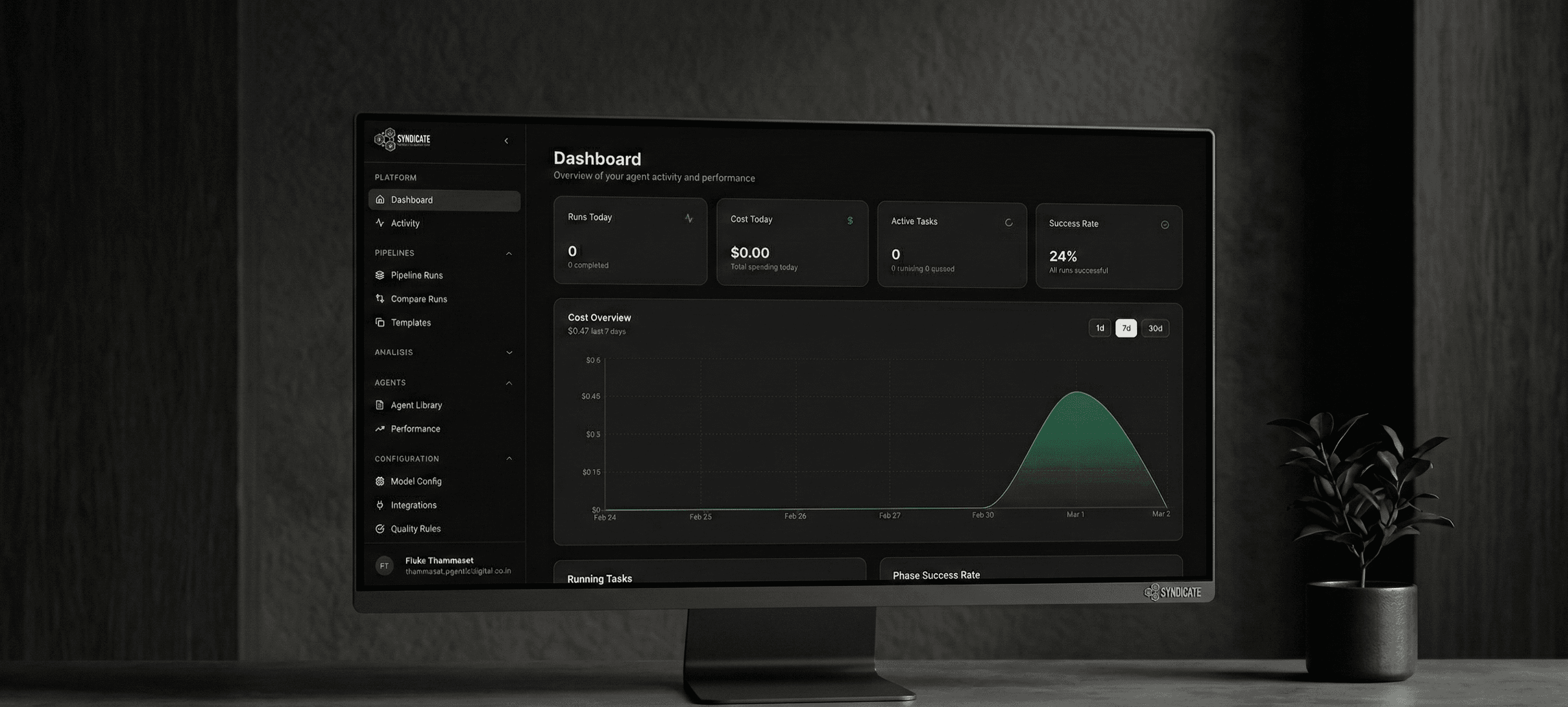
Since the system performs complex background operations, the dashboard is designed for real-time observability:
- Agent Activity Overview: Provides a live feed of which specialized agent is currently processing each task.
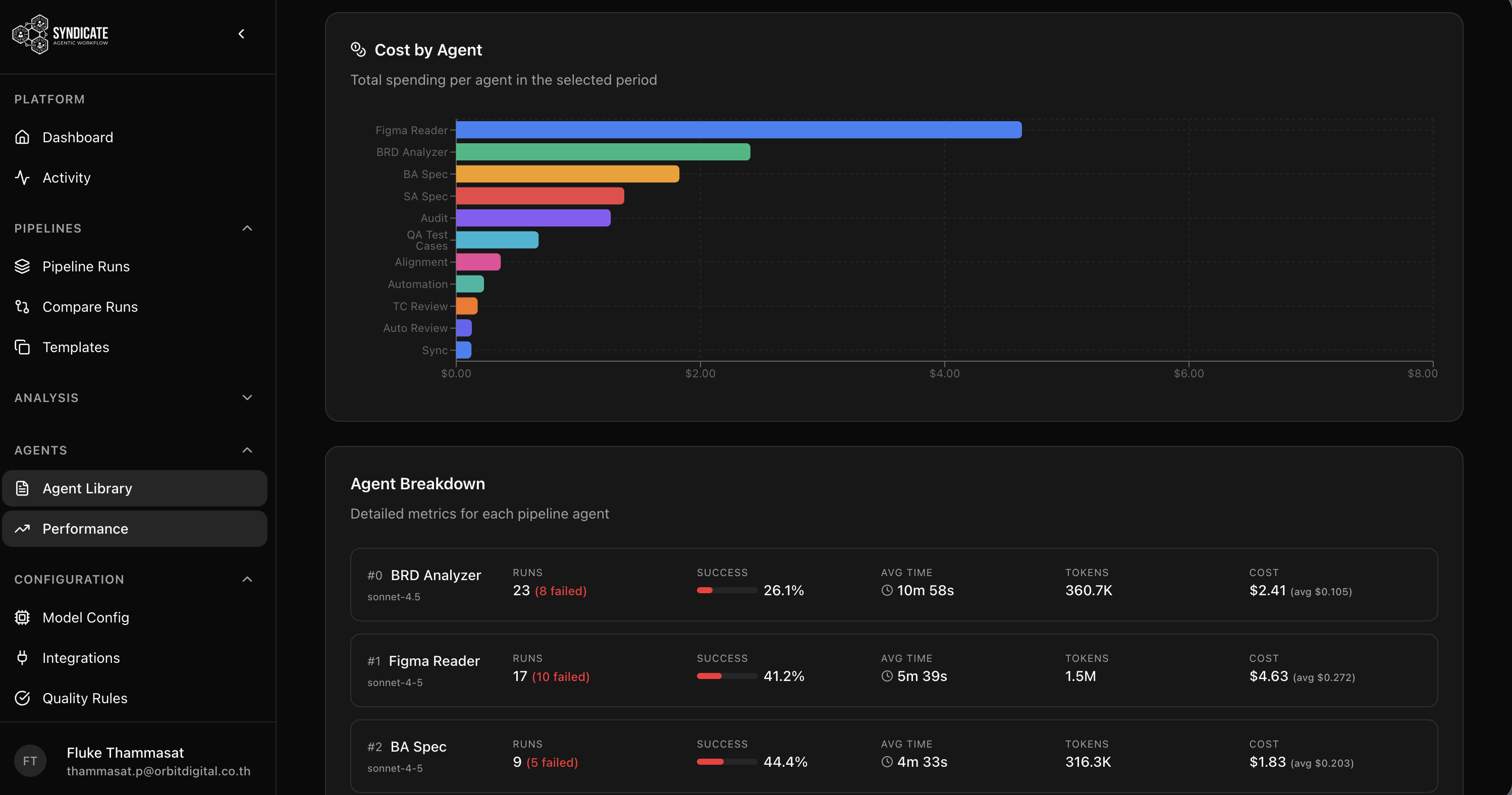
- Cost-Transparency: Visualizes Anthropic API token usage (1d/7d/30d) for clear budget management.
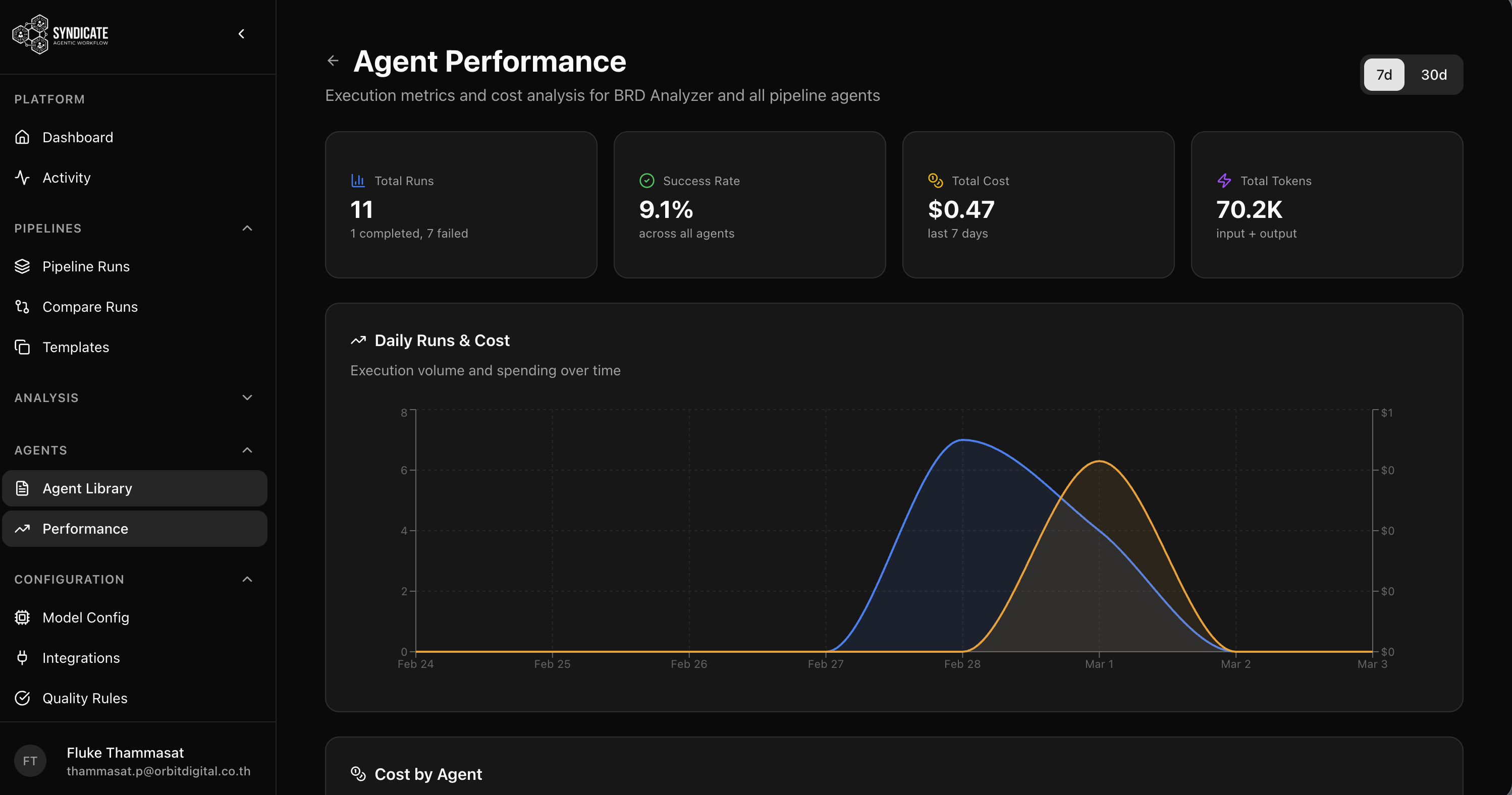
- Phase Success Rate: Metrics that pinpoint the performance of each pipeline stage, highlighting areas for continuous improvement.
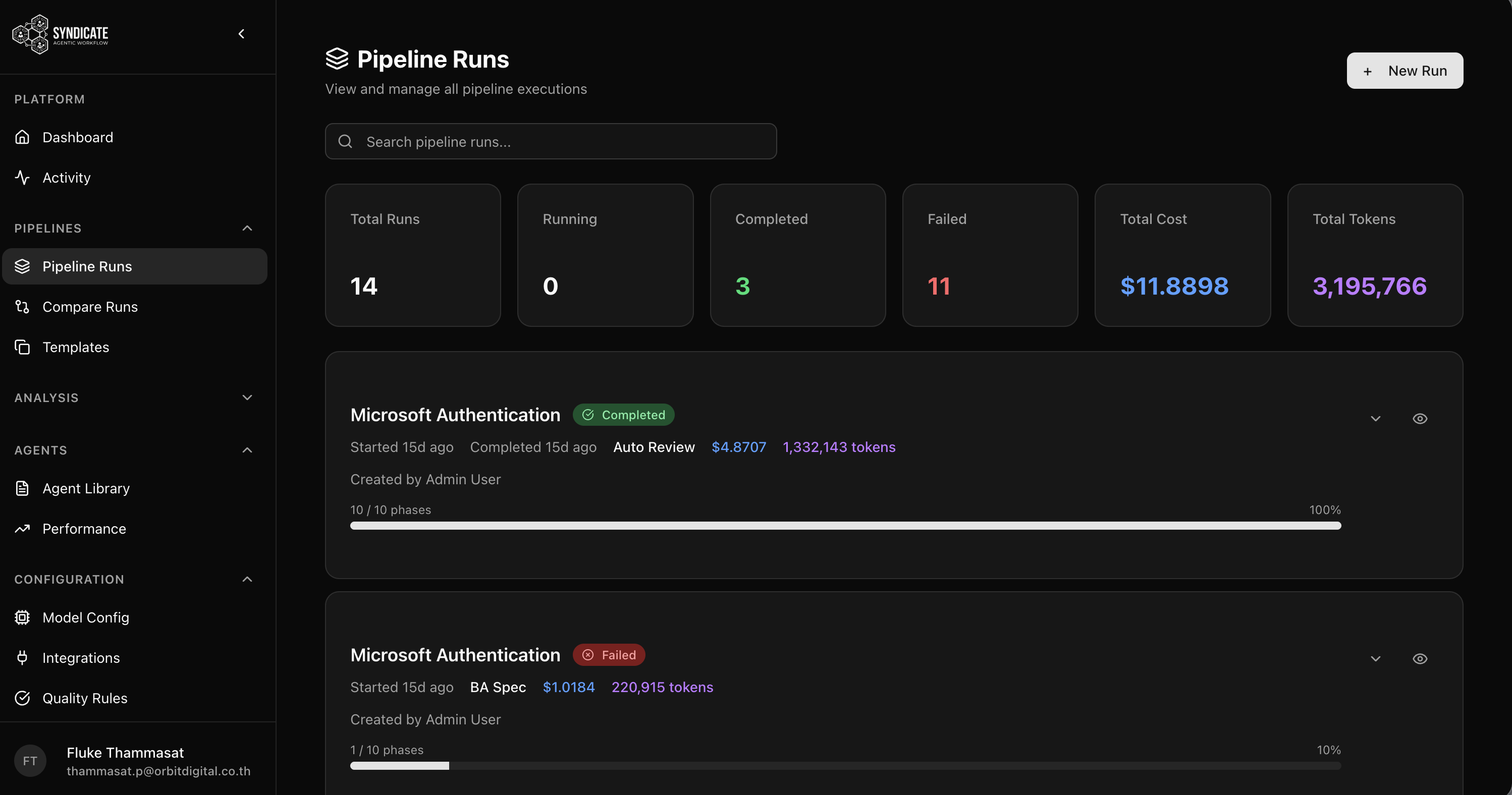
Complexity Managed by Context
Syndicate simplifies high-density information (JSON contexts, UML diagrams, etc.) through a clean, intuitive interface:
- Step-by-Step Guidance: The pipeline creation process is modularized to reduce cognitive load during setup.
- Bilingual Content Strategy: Designed with a dual-language interface (TH/EN) to meet the needs of international enterprise environments where local context and global standards must coexist.
Premium Agentic Aesthetics
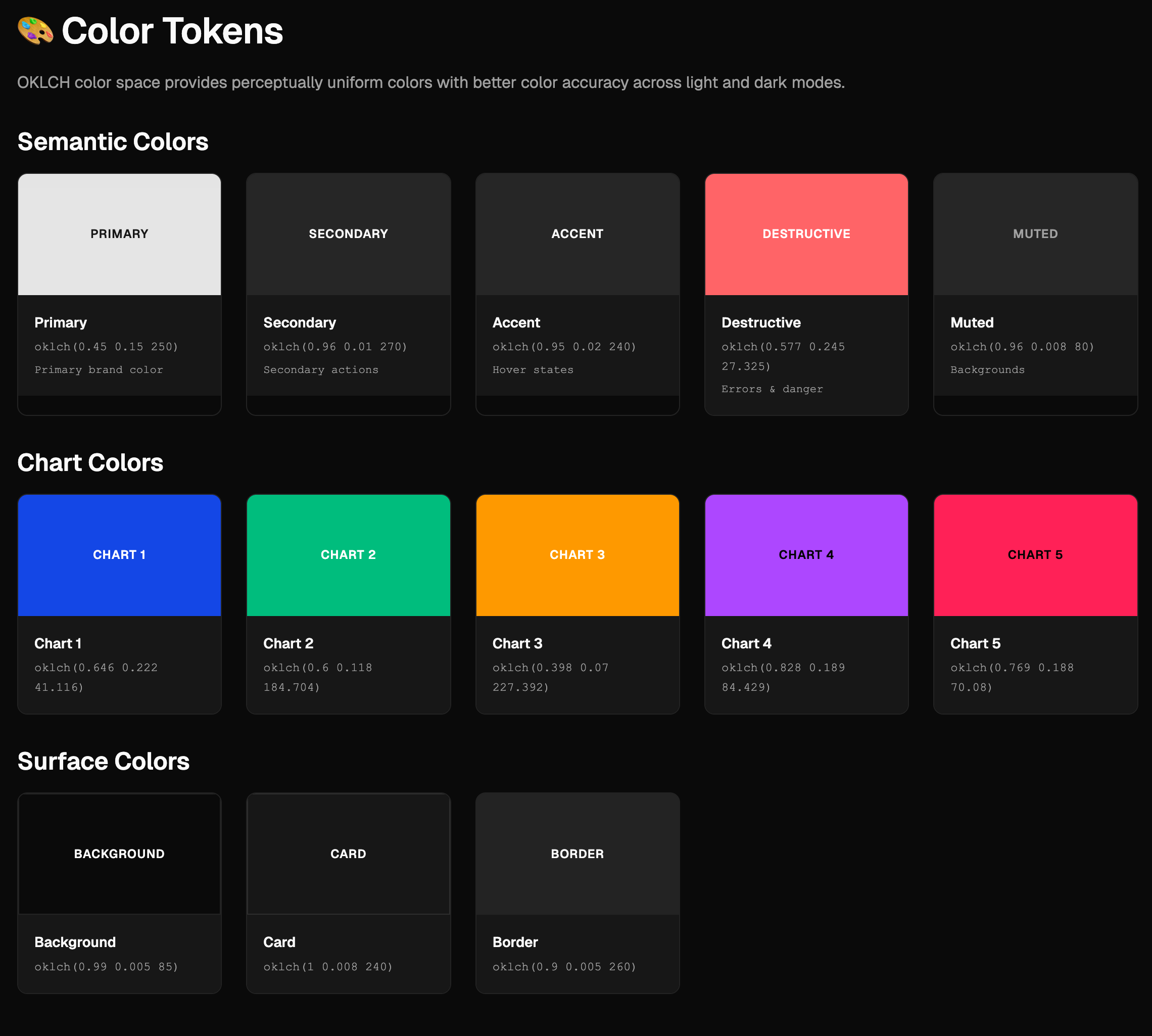
The visual identity reflects the "Future of Work" through a sophisticated design language:
- Dark Mode First: A deep, focused color palette that reduces eye strain and evokes a high-performance OS feel.
- Visual Feedback Loops: Micro-interactions and smooth transitions indicate state changes as agents hand over tasks, making the "intelligence" feel alive.
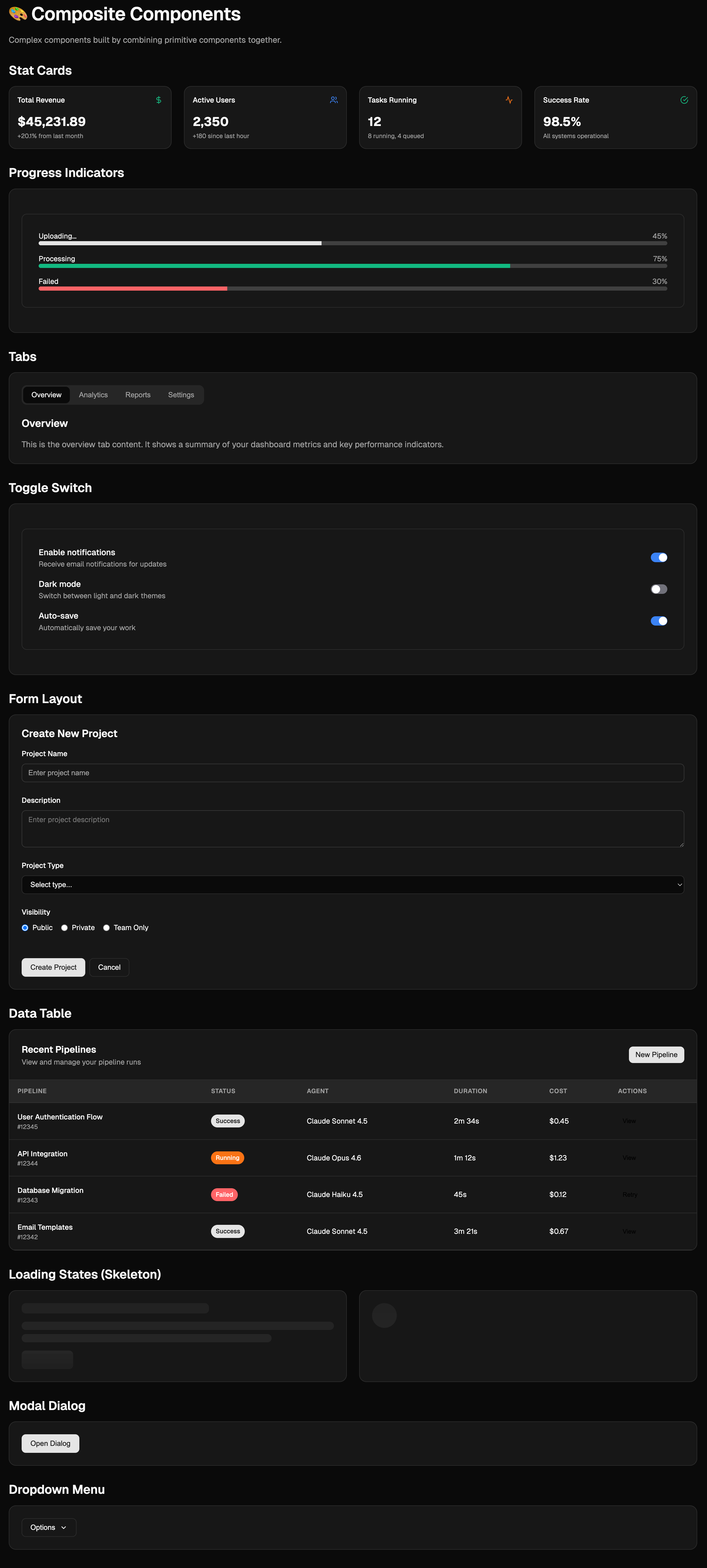
- Component-Driven UI: A modular interface that mirrors the system’s own architecture of independent, cooperating agents.
Outcomes & Technical Impact
- Eliminated repetitive, manual documentation tasks for BA, SA, and QA roles.
- Ensured 100% consistency across all project deliverables and documentation.
- Shifted the human role from "Content Creator" to "Strategic Auditor."